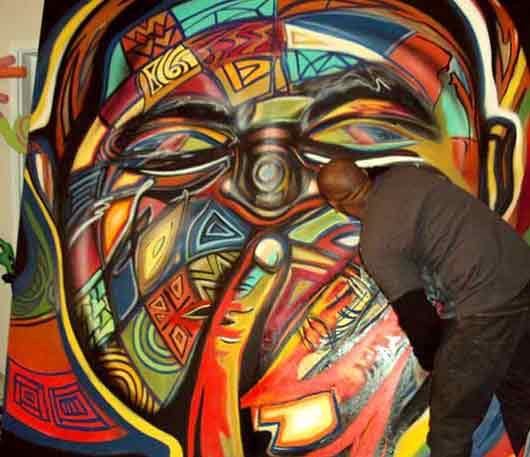
Enlarging an Image for a DIY Mural
Turning a small reference image into a wall-sized mural comes down to one core skill: scaling the image up accurately without losing its proportions or details. Professional muralists use a few reliable methods to do this, and the same techniques work for anyone tackling a DIY mural project at home.
The Grid Method
The grid method is the most accessible way to enlarge any image without special equipment. Draw an evenly spaced grid over the reference image — say, one-inch squares — then draw a matching grid on the wall at whatever scale the mural needs, keeping the same number of rows and columns. Transfer the contents of each small square to its corresponding large square on the wall, one section at a time. It's slower than other methods, but it requires nothing more than a ruler, pencil, and patience.
The Projector Method
A digital or opaque projector is the fastest way to scale an image accurately onto a large wall. Load the reference image, position the projector far enough back to reach the desired size, and trace the projected outlines directly onto the wall in pencil or chalk before painting. This method preserves proportions perfectly and is especially useful for detailed or figurative designs where freehand scaling would introduce errors.
Working Out the Scale
Whichever method is used, it helps to calculate the scale ratio ahead of time: measure the reference image and the wall, then divide the wall's dimensions by the image's dimensions to get a consistent scale factor for both width and height. Keeping that ratio consistent is what prevents a mural from looking stretched or distorted once it's finished.
Paint and Supplies
Once the outline is transferred, exterior murals call for UV-stable, fade-resistant exterior paint, while interior murals have more flexibility in paint choice. A basic supply list includes painter's tape for clean edges, a range of brush sizes for detail versus fill work, and a protective sealant for any mural exposed to weather.
When to Bring in a Professional
DIY methods work well for smaller, simpler designs — a single accent wall or a straightforward graphic. For large-scale, highly detailed, or publicly visible murals, a professional muralist brings the design skill, surface prep knowledge, and access equipment needed to get a complex piece right the first time.