The Jazz Age Meets The Machine Age; is here that we find jazz and blues connecting with ne of the great controlling sensibilities of the decade, ne that touched not only music but also art, xhitecture, design, cinema and virtually every aspect f the cultural environment.
The spirit of the 1930s as dominated by new possibilities of technology and as manifested in notions of speed, structural integration and futuristic, aerodynamic shapes. Beyond teir functions, these technological achievements were Iso expressions of an empirical technocracy that was resistibly bright and optimistic. In one brief 18-month eriod from 1934-36 America saw its first diesel reamliners, the Chrysler Airflow car, the space-age tells that turned steam engines into projectiles on lils, the DC-3 aircraft, the Golden Gate Bridge and te polished, Brancusian lines of Jean Harlow captured l iconic MGM publicity stills.
In the midst of this fixation with stylized lodemity and motion, the smooth, rhythmic [omentum of swing became an extension of the same )irit of efficiency that found beauty in sleek designs urn from the physics of velocity and speed. In jazz :rms, swing reached a perfection of form by 1939 with le Count Basie band, particularly in its principal tenor xophone soloist Lester Young (1909-59) and the :umming of Jo Jones (1911-85), of whom it was said, e played like the wind'. It was a fitting allegory for le streamlined 1930s.
These cultural developments also had an effect i blues music; despite the fact that great country blues ould continue to be performed and recorded, it was ear that around this time the momentum in blues usic was moving in the direction of a more urban iund. The changes begun in blues in the late 1930s ould come to fruition in the next decade; in time, ime blues influence would play a part in most styles American music, including gospel and country. Blues Takes A Back Seat
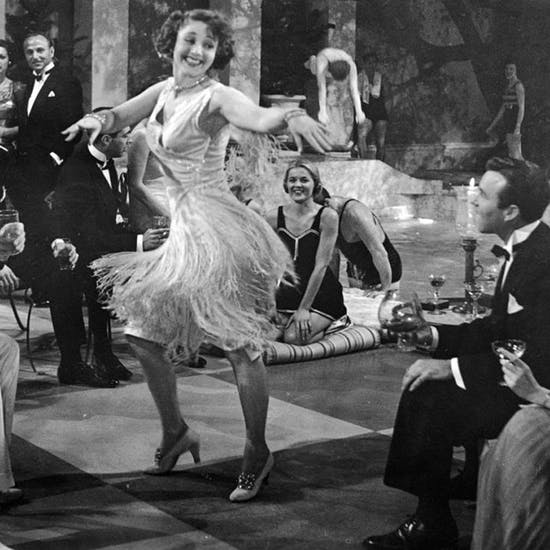
If these relationships seem abstract and intangible, they soon assumed more concrete expressions as jazz spilled out into daily life through radio, movies, advertising and the new dance styles created to follow the music.
The top white swing bands, in addition to being heard on sustaining broadcasts from hotels, played on their own radio shows sponsored by major advertisers - often cigarette companies eager to reach young audiences. In Hollywood, swing quickly found its way on to the screen. Louis Armstrong appeared in Pennies From Heaven (1936), Artists And Models (1937) and Going Places (1938). Benny Goodman's music mingled with the Art Deco modernism of Paramount's Big Broadcast of 1937 and Warner Bros.' Hollywood Hotel of the same year, and at Jazz managed to swiftly become the popular music of America. As the big swing bands now formed at the forefront of American showbusiness, blues began to take a back seat - although many of the key players such as Basie and Duke Ellington had used the blues as a basis for much of what they performed.